International Cargo Insurance: Coverage, Risks and Incoterms
International cargo insurance is an essential safeguard for businesses that import, export or move goods between countries. When goods cross borders, more parties, documents, transport modes and critical stages are involved: loading, transit, handling, customs, unloading and temporary storage. Along the way, damage or loss can affect not only the value of the goods, but also customer commitments, delivery deadlines and cash flow.
That is why this insurance should not be treated as a mere formality associated with shipping. It should be part of a company’s commercial and logistics management. This is especially important in international operations, where businesses need to understand who bears the risk at each stage of transport, what the policy covers and how it relates to the Incoterms agreed in the sales contract.
If your business transports goods within or beyond Spain, you can find more information about cargo and goods transport insurance.
What does international cargo insurance protect?
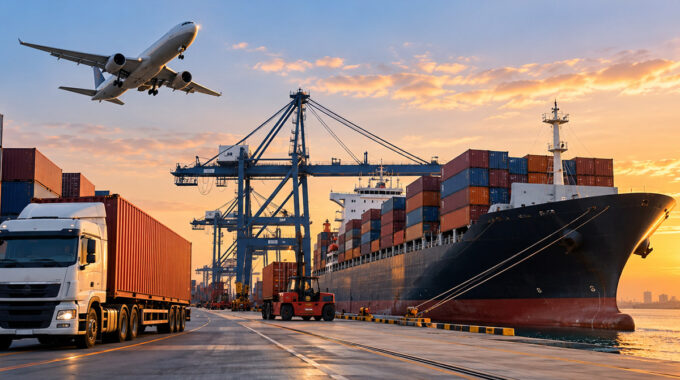
International cargo insurance is designed to protect goods while they are being transported, whether by road, sea, air, rail or a combination of transport modes. Its main purpose is to cover damage or loss that may occur in transit, subject to the terms and conditions agreed in the policy.
In an international shipment, goods may pass through many hands before reaching their destination: carriers, freight forwarders, logistics providers, warehouses, port terminals and customs agents. This complexity means that a business should not rely solely on the liability of the parties involved. Carrier liability is often limited by applicable conventions or contractual terms, and may not cover the full value of the goods or every scenario of concern to the seller or buyer.
Cargo insurance therefore allows a company to protect its financial interest in the shipment more directly. It does not replace sound logistics management, but it helps reduce the impact of incidents that may occur during transport.
Why Incoterms matter when insuring goods
Incoterms are internationally recognised rules that help define the obligations of buyers and sellers under a sales contract. Among other things, they establish who arranges transport, who bears certain costs and at what point the risk associated with the goods transfers from one party to the other. Incoterms 2020, published by the International Chamber of Commerce, comprises eleven trade rules for domestic and international transactions.
This is a fundamental consideration for insurance. Agreeing on an Incoterm does not automatically mean that the goods are adequately insured. The rule allocates responsibilities between buyer and seller. Each company must then establish whether it is responsible for arranging insurance, whether the other party will do so, what level of cover is provided and whether that cover genuinely protects the value of the transaction.
For example, international sales commonly use Incoterms such as EXW, FCA, FOB, CIF, DAP and DDP. Each involves a different allocation of costs, delivery obligations and risk. Before finalising a transaction, it is therefore important to review not only the price and transport arrangements, but also who will insure the goods and to what extent.
The difference between insuring cargo and relying on the carrier
One of the most common mistakes made by importing and exporting companies is assuming that goods are already sufficiently protected because a professional carrier is involved. Carriers do have legal responsibilities, but these do not always match the commercial value of the goods or the company’s actual needs.
In international road transport, for example, the CMR Convention governs aspects of contracts for the international carriage of goods by road and establishes carrier liability in certain circumstances. However, for a business buying or selling goods, relying solely on this liability may be insufficient when the value of the shipment, delivery deadlines or commercial commitments are significant.
Cargo insurance can protect the company’s financial interest in the shipment beyond the limitations that may apply to the liability of the logistics provider or carrier. For this reason, it is advisable to review the policy before dispatching valuable international shipments, rather than after an incident occurs.
Which types of cover should be considered for international transport?
Not all goods or routes are exposed to the same risks. Industrial cargo, food products, electronic components, machinery, textiles, medical supplies and fragile items each present different challenges. The assessment also changes depending on whether the shipment travels in a shipping container, by road, as part of a consolidated load, by air or through a multimodal solution.
Even so, several areas deserve particular attention.
Damage to or loss of goods
This is the core of cargo insurance. Depending on the cover purchased, the policy should address physical damage to or loss of goods during transport. It is important to check whether the coverage is suited to the type of product, packaging, transport mode and declared value.
Theft and missing cargo
Theft can be a significant risk on certain routes or for particular types of goods. Low-value items face different exposures from technology products, spare parts, beverages, fashion items or goods that can easily be resold. In these cases, it is important to review policy conditions, required security measures and potential exclusions.
Loading, unloading and handling
Many incidents occur not during the main journey, but during loading, unloading, transshipment or handling in warehouses and terminals. These intermediate stages matter in international trade because goods may change transport mode, operator or location before reaching their final destination.
Multimodal transport
An international shipment may combine road, sea, air and rail transport. This requires more careful review because each leg may be subject to different operating conditions and liability rules. Businesses that frequently ship goods by sea may also benefit from exploring marine insurance solutions.
Temporary storage during transit
When goods are held temporarily in warehouses, terminals or storage facilities along the route, it is important to confirm whether those periods are covered. In some industries, temporary storage is a normal part of the shipping process and should not be overlooked when assessing insurance needs.
How Incoterms influence the purchase of cargo insurance
The relationship between Incoterms and insurance often raises questions because it directly affects which party needs to arrange the policy. In practical terms, a business should ask three questions before finalising an international transaction.
First, who bears the risk at each stage? Second, who arranges the transport? Third, who insures the goods, and under what terms? The answers do not always point to the same party, which is where mistakes can arise.
Under CIF or CIP terms, for example, the seller is required to arrange insurance under specified conditions, but that does not necessarily mean the resulting cover is the most suitable for the buyer. Under other Incoterms, the buyer may need to ensure that the goods are protected from the moment the risk transfers to them.
The practical conclusion is straightforward: Incoterms should not be reviewed only from a purchasing, sales or logistics perspective. They should also be considered from an insurance perspective, because they determine when a party may become exposed to loss.
Common mistakes when insuring international shipments
In international trade, many problems arise not from a complete lack of insurance, but from poor coordination between the sales contract, transport arrangements, Incoterms and insurance policy.
Failing to align insurance with the agreed Incoterm
If a contract specifies an Incoterm but the policy is not reviewed against the corresponding allocation of risk, gaps can arise. A business may believe its goods are protected when, in fact, risk has already transferred to the other party or the insurance does not extend to the stage of transport that matters most.
Insuring goods for an insufficient value
The insured value should accurately reflect the financial interest at stake in the transaction. The purchase cost alone is not always enough. Depending on the circumstances, associated expenses, freight costs, profit margin, taxes, replacement costs and commercial commitments may also need to be considered.
Failing to consider the nature of the goods
Every product has its own characteristics. Perishable, fragile, hazardous, high-value or temperature-controlled goods, and items requiring special packaging, call for closer assessment. Using a standard policy without considering the nature of the cargo can create problems.
Assuming storage and handling are automatically covered
In international trade, goods may pass through several stages before reaching their destination. Where transshipments, temporary warehouses or third-party handling are involved, it is worth checking whether coverage remains in force throughout those stages.
Failing to document an incident properly
When damage occurs, documentation is crucial. Reservations noted on transport documents, photographs, communications, delivery notes, reports and claim deadlines can all affect the handling of a loss. Importing and exporting businesses should have a basic procedure to follow as soon as an incident is discovered.
What information should you prepare before requesting a quote?
To obtain a useful international cargo insurance proposal, it is important to provide clear information about the shipment or operation. There is no need for a complicated dossier, but an accurate description is essential.
Useful details include the type of goods being transported, their approximate value, origin and destination, transport mode or modes, agreed Incoterm, shipping frequency, packaging, any temporary storage, and any regularly used routes or countries. It also helps to clarify whether the business makes occasional shipments or has an established flow of imports or exports.
This information helps determine whether a single-shipment policy, an open policy for recurring shipments or a solution tailored to the company’s international activities would be most appropriate.
When should you review your international cargo insurance?
It is advisable to review insurance when countries of origin or destination change, when the type of goods or average shipment value changes, or when the Incoterm, logistics provider or shipment frequency is different. A review is also recommended when a business begins importing or exporting regularly, as a policy designed for occasional shipments may become inadequate once activity increases.
Another warning sign is a lack of shared understanding between purchasing, sales and logistics teams about who bears the risk at each stage. If departments interpret the transaction differently, the insurance may not reflect the company’s contractual position.
Frequently asked questions about international cargo insurance
What is international cargo insurance?
It is an insurance policy designed to protect goods while they are transported between countries, whether by road, sea, air, rail or a combination of transport modes, subject to the agreed policy terms.
Do Incoterms determine who must arrange insurance?
Incoterms help define obligations, costs and the transfer of risk between buyer and seller. Some rules require one party to arrange insurance, but the actual scope of the agreed cover should always be checked.
Is carrier liability insurance enough?
Not always. A carrier’s liability may be limited and may not reflect the full value of the goods or the commercial impact of loss or damage. That is why many businesses take out specific cargo insurance.
What information is needed to insure an international shipment?
The type and value of the goods, origin and destination, transport mode, Incoterm, shipping frequency, packaging, temporary storage arrangements and logistics operators involved.
International cargo insurance is an essential tool for businesses that buy, sell or distribute goods across borders. Its value lies in protecting shipments and helping prevent a logistics incident from becoming a commercial, financial or contractual problem.
The key is to review the entire operation: the type of goods, route, transport mode, Incoterm, insured value and responsibilities assumed by each party. When insurance, contractual arrangements and logistics are aligned, a business gains greater control and the ability to respond effectively.
If you would like to assess your international operations and identify the insurance solution best suited to your business, you can request a proposal through our Contact page.